Picked up two more
Went back down to Dad's yard last night and brought home two more hives. I now have four colonies, all of them on bee pallets in the back pasture in Weston. The plan that started as "just take two for a first season" has officially turned into "fine, take four, you'll thank yourself in February."
The reason I caved is the part I wrote about in the last entry: Dad split nine winter survivors into roughly 27 colonies after almond pollination, he only wants to keep eight himself, and the math on the rest is real. These are strong, early, post-almond hives, and Dad was offering. Easy call.
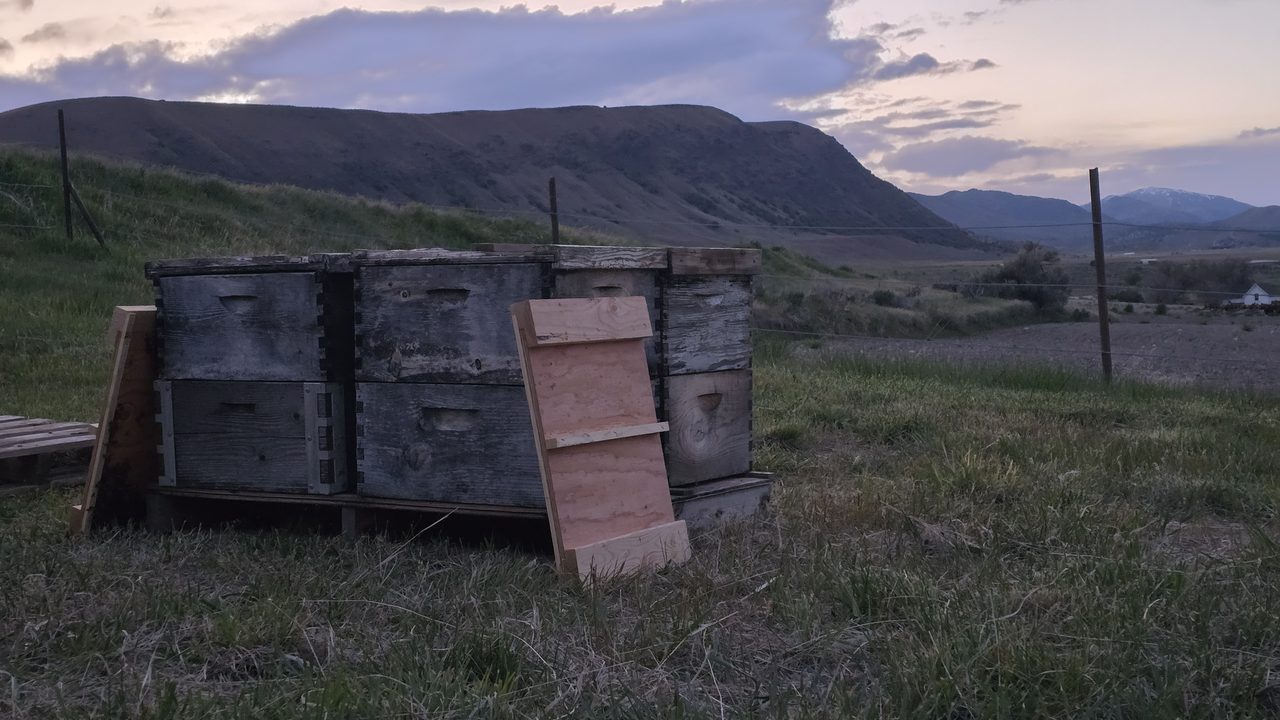
Why the pallets matter
The whole point of putting all four colonies on bee pallets, instead of single hive stands or a row of cinder blocks, is that they can be forklifted onto a truck. That's the only thing that turns "my hives" into "my hives that go to California with Dad's hives next January" without an afternoon of wrestling boxes off stands at 2 a.m. in the cold.
Almond pollination is what gave Dad the brood strength to triple his colony count this spring. If I want any of that math to work for my apiary in 2027 — splits, queen rearing, the option of selling nucs in May the way he does — these hives need to come back from California ready to explode. That doesn't happen by accident in this valley. We don't get the early warm-up that, say, Sacramento or even St. George does. The almonds buy you several weeks of buildup that the Cache Valley calendar is never going to hand you.
Four hives on pallets, palletized from the day they arrived, is the cheapest insurance policy I'm going to write all year. Even if I decide not to truck them next winter, the cost of being palletized is essentially zero. The cost of not being palletized when you change your mind in December is a long, cold weekend.
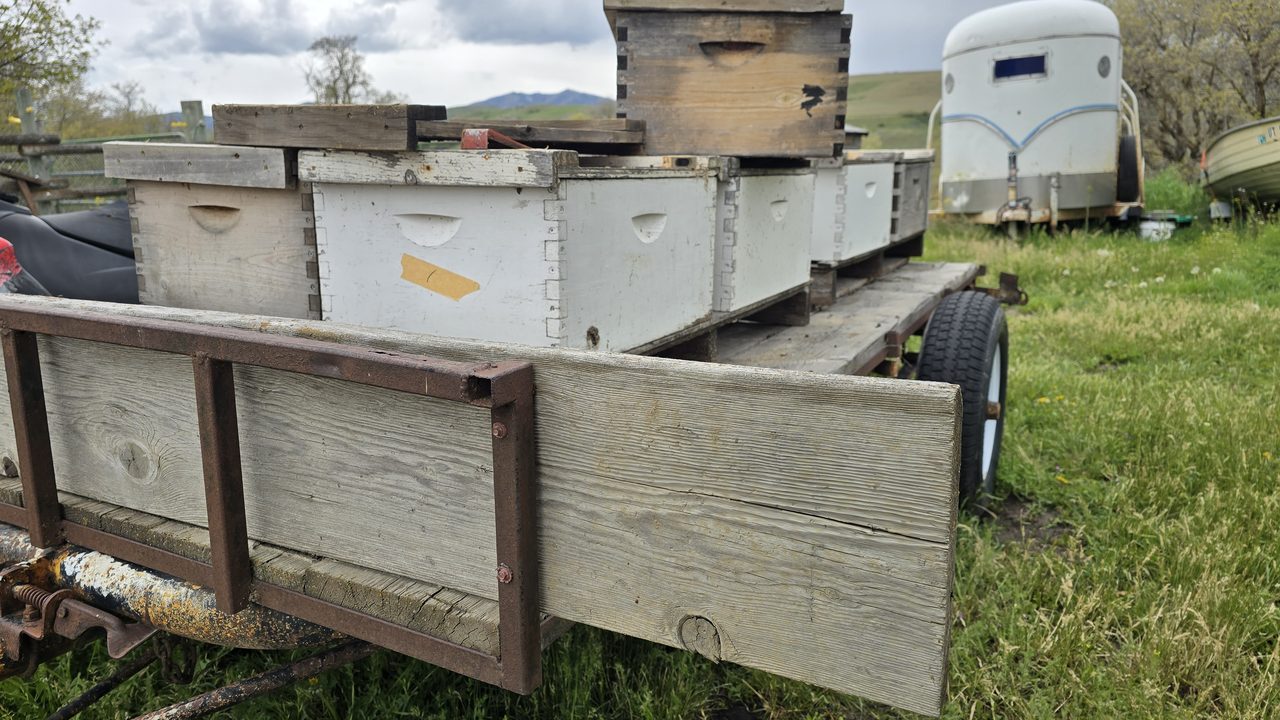
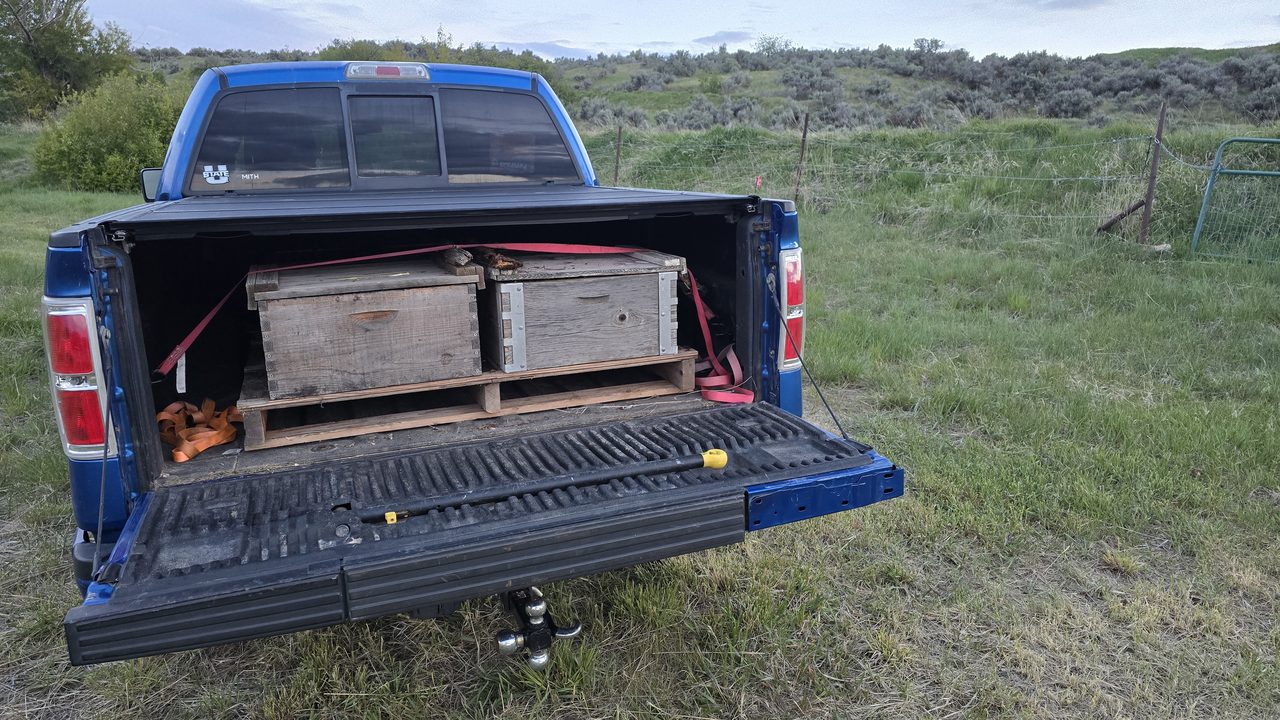
The move itself
Same routine as the last pickup: load after sunset, drive up the valley with the hard cover on the truck bed, ratchet strap across the boxes, take it slow. Temperature was somewhere between 45 and 50°F when I started, which is the sweet spot — the foragers are all home, the cluster is calm, and you don't need a smoker or a veil to do the work. I didn't bother with entrance plugs again. The bed cover does most of the job, and a few miles of highway with the cab heater on isn't enough to wake them up at that temperature.
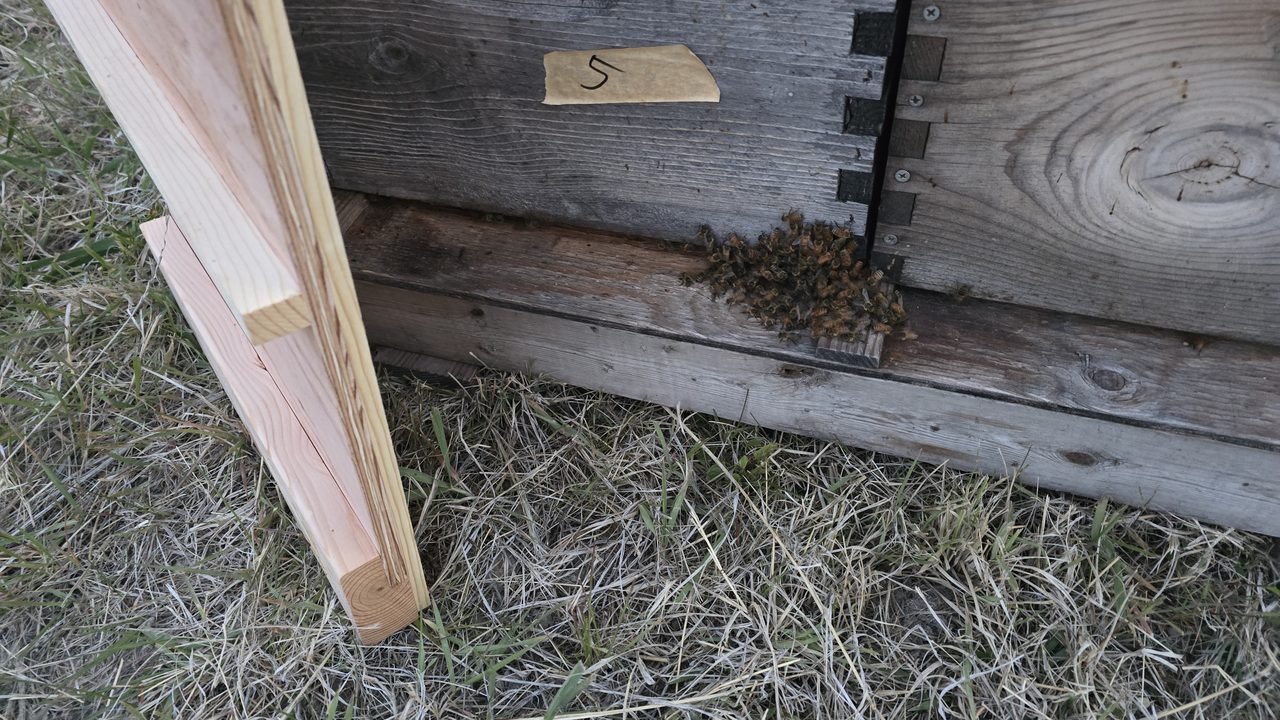
The bottom-board trick
One detail I haven't seen written up much in the beginner guides: when you transfer a hive off its old bottom board onto a pallet that has its own integrated bottoms, you end up with a couple hundred bees still clinging to the original bottom. They're foragers and house bees that were on the underside or on the entrance reducer, and they don't always migrate up to the new entrance on their own.
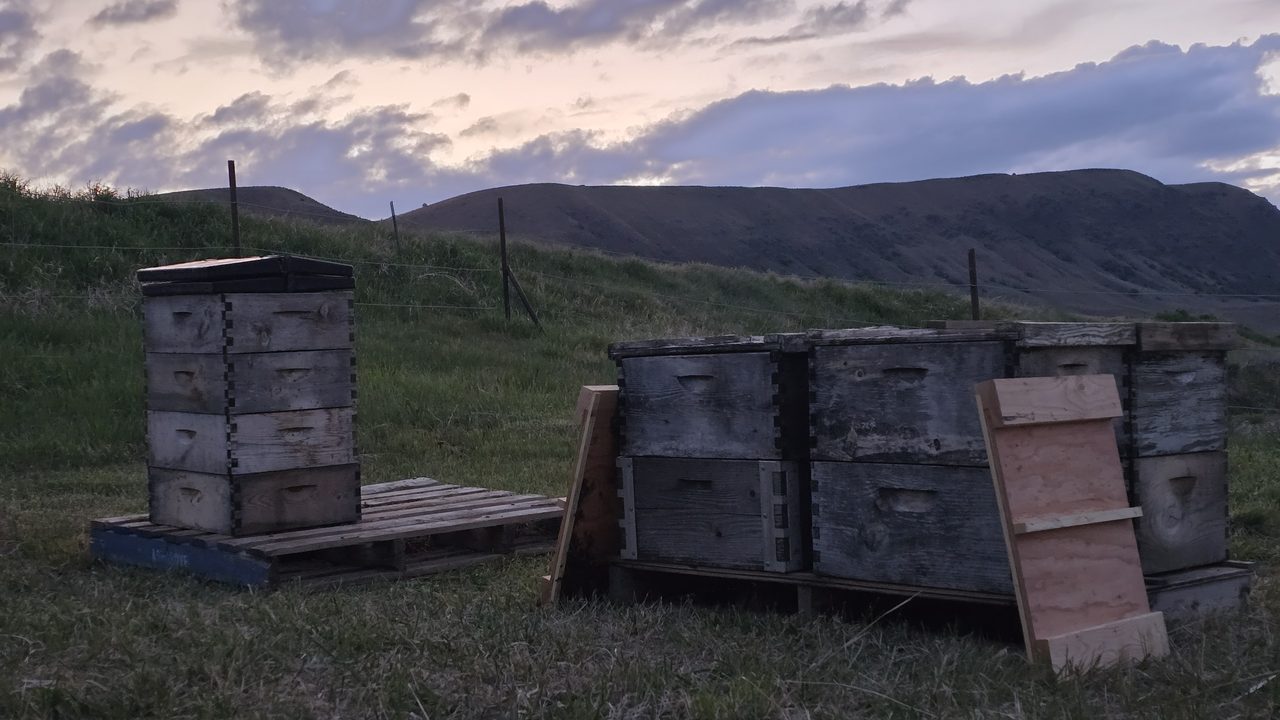
The fix is dead simple. Lean the original bottom board against the new entrance, with the bee-side facing the hive. Within an hour or two, the lingering bees walk or fan their way up the ramp and back into the colony. By morning the bottom board is empty and you can pull it out and stack it for next time. You can see the two leftover bottoms in the dusk shot above — that's not me being lazy, it's the cleanest way to make sure you didn't lose any flyers.
Second deeps on the same night
Same call as the first pair: I put a second deep brood box on each of the new hives the same night I set them on the pallet. Both came up cramped — a lot of bees, hundreds bearding on the front, the kind of obvious tell that tells you the queen has already filled most of what she has. I'd rather give them the space immediately than make a separate trip in three days when it's clear from the entrance behavior that I should have done it the first time.
I also brought four honey supers up in the same load and stacked them on a spare pallet next to the hives, with four top feeders sitting on top of the stack. You can see the column of supers-and-feeders in the wide dusk shot above — that stack is the on-deck circle. None of it goes on the bees yet. The colonies need to finish drawing the second deep before a super makes any sense, and I don't want to start syrup feeding until I've verified queens and brood pattern this Saturday. But everything I'd need is now five steps from the hives instead of forty-five minutes down the valley. The window between "second deep is mostly drawn" and "they need a super yesterday" is short in this valley, and the only way I miss it is if I have to drive somewhere to get equipment.
Two Carnies and two Italians
The genetics breakdown is now two Carniolan-cross hives (the first pair) and two Italian-cross hives (the new pair). Dad bought the queens this spring rather than rearing his own, mainly to get a head start on the season. He'll admit that with how mild this winter ended up being, he probably could have raised his own without losing much, but the bought queens were already mated and laying when he picked them up, which is hard to argue with on a calendar like this one. The workers in the new boxes are going to lean a little more Italian in temperament: calmer on the frame, bigger summer brood nests, slightly slower to button down for fall.
Having two of each is going to be useful. The point of this series is comparing what actually happens in this valley, not what the breeder description says will happen. Two-and-two gives me an honest side-by-side: same yard, same forage, same weather, same beekeeper, different genetics. By August I should have something useful to say about which line is pulling its weight and which one is just easier to talk about.
Four hives is honestly more than I planned for a first summer at a new place. But I've been working bees with Dad for years — the truck rides to and from California, the spring splits, helping pull honey in late July — so it's not really a "first summer" in the way it would be if I'd never opened a hive before. Four is a lot for a first solo summer, but it's not four hives' worth of unknown.
A deadout at Dad's
While I was loading, I went through one of Dad's colonies that didn't make it through the winter. Worth documenting because every "the bees are doing great" post on this site comes with the implicit reminder that the math goes the other way too. Nine survivors after almonds is a strong winter. The ones that didn't make it are the rest of the story.
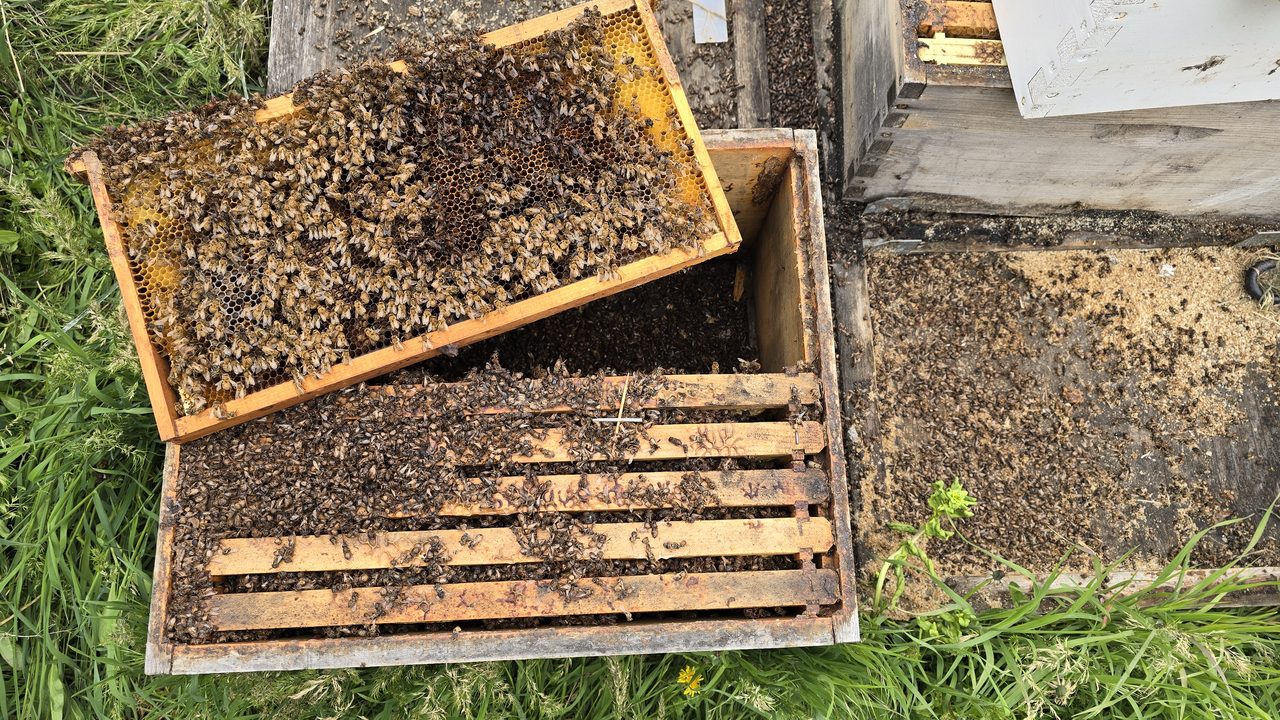
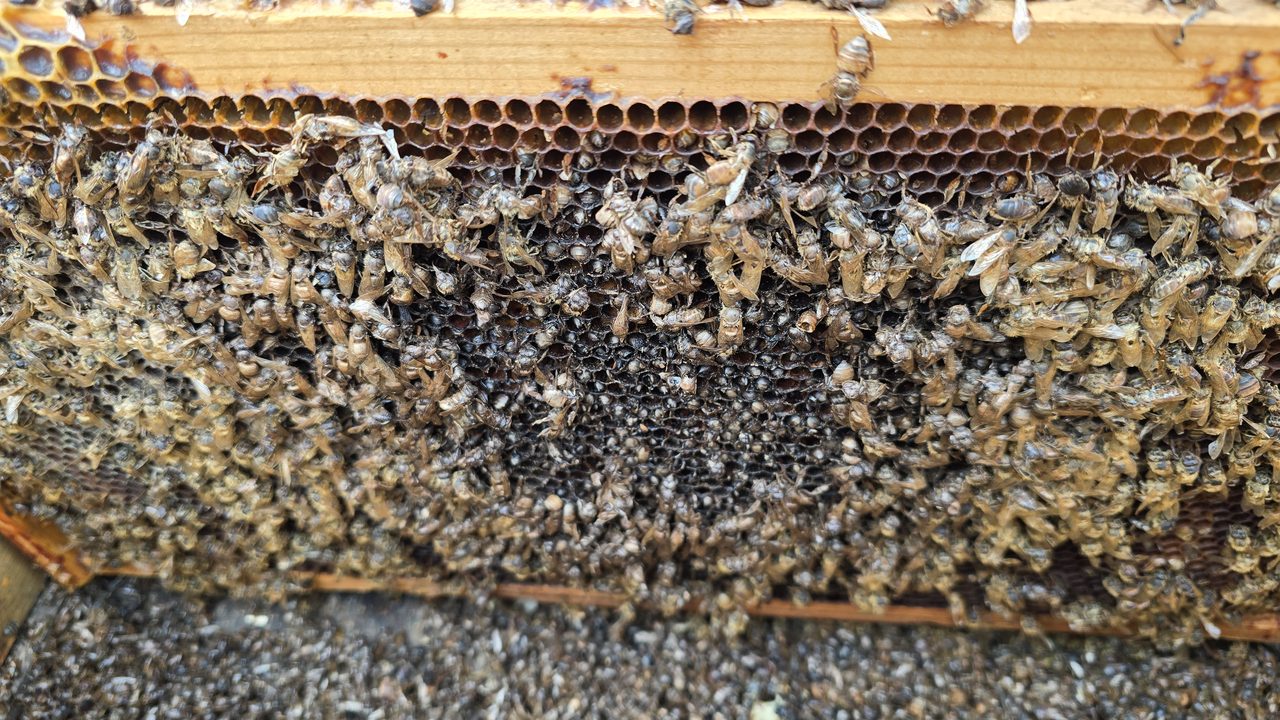
The short version: this colony starved. Not "isolation starvation," where the cluster freezes off the edge of stores it can't reach — actual starvation. There's no honey left in the box. They ate through every frame they had and ran out of food before the spring flow could bail them out. By the time the bees were dying, they were chewing through empty drawn comb looking for anything left behind.
That bee with the paint dot in the middle of the frame is the queen of this hive, dead with the rest of them. Dad marks his queens with a dot of paint on the thorax so they're easier to spot during inspections. She didn't help here. The cluster ran out of food and she starved with it. A marked queen isn't a free pass on winter management — the dot makes her easier to find in July. It doesn't feed her in February.
Two things I want to remember when I plan winterizing this fall, and that I'd encourage anyone in our part of the valley to plan around:
- Going-into-winter weight is the whole game. If a hive doesn't go into November heavy enough, no amount of cluster placement or insulation is going to save it. In Cache Valley I want a double-deep that I can barely tip back, not one I can lift one-handed. If they don't have it on their own by mid-October, they get fed until they do.
- Top-of-frame emergency feed in late winter. A fondant patty or sugar board laid directly above the cluster in February is the cheap insurance that prevents exactly this picture. Cost is a few dollars and ten minutes on a 40°F day. The cost of skipping it is what you see above.
I'll have more to say about all of this in the fall when I'm winterizing my own four. For now it's a useful gut check: the hives riding home in my truck bed came out of the same yard where I just photographed a deadout. The good ones came through almonds. The ones that ran out of food are sitting open at the back of the yard.
Saturday's plan: maybe a top-box swap
One thing Dad mentioned when we were loading the truck, and that I'm going to think hard about on Saturday's full inspection of the original pair: a top-brood-box swap from the strongest hive into the weakest hive.
The idea is straightforward. Hive 1 (the bigger Carniolan-cross) is already most of the way to wall-to-wall in its top deep, which means swarm pressure is going to start building soon. Hive 2 is moving slower and could use a population shot to keep up with the flow. If I lift the top deep off Hive 1 and put it on Hive 2, Hive 1 gets immediate empty space (no more swarm pressure for a couple of weeks) and Hive 2 gets a tidal wave of nurse bees and capped brood that's going to emerge over the next several days.
The non-negotiable prerequisite is verifying which box each queen is in before I move any frames. If I move the queen with the top box, I've just queenless'd the wrong hive. So Saturday's order of operations is:
- Open Hive 1 bottom-up, find the queen (or eggs in the bottom deep, if I don't get a visual on her).
- Open Hive 2 bottom-up, do the same.
- Only if both queens are confirmed in their bottom deeps, swap the top deeps.
- If either queen is up in the top, abort the swap and just give Hive 1 some checkerboarding instead.
The Carnies are the ones running closer to capacity, and they're the ones I'd actually be trying to defuse here. Italians are typically slower to throw a swarm cell, so the bigger swarm risk lives on the Carniolan side of the yard.
What's next
- Saturday (May 2): full frame-by-frame on the original pair — confirm queens, check brood pattern, take a Varroa baseline, and run the swap above if the queens cooperate.
- Same day: peek into the new pair just enough to confirm they're using the second deep. No deep dive yet.
- Watch the dandelion flow. Once it really opens up, the first honey super off the on-deck stack goes on whichever hive is moving fastest.
- Start a winterizing plan for fall that takes the deadout in mind — going-in weight, late-winter top feed, and a real entrance-reduction schedule.
Related
- All entries in this series
- Settling in the first two hives
- Winterizing a hive in Northern Utah — the other half of the deadout story
- Spring inspection checklist for Cache Valley
Product links above go to Amazon.com. As an Amazon Associate I earn from qualifying purchases.