The pickup
Picked up the two hives from Dad's yard on Thursday and moved them after dark to my place in Weston, Idaho. Moving bees after sunset is the easy way: the foragers are home, the colony is calm, and you don't leave a few hundred confused bees orbiting an empty stand the next morning.
It was cool, upper 40s, so the bees weren't flying anyway. I didn't bother with entrance plugs. They came up the valley in the bed of my pickup, which has a hard cover on it, so the highway breeze never really hit them. By the time we got to the property the boxes were quiet enough that we could just set them on the pallet in the back pasture and start working.
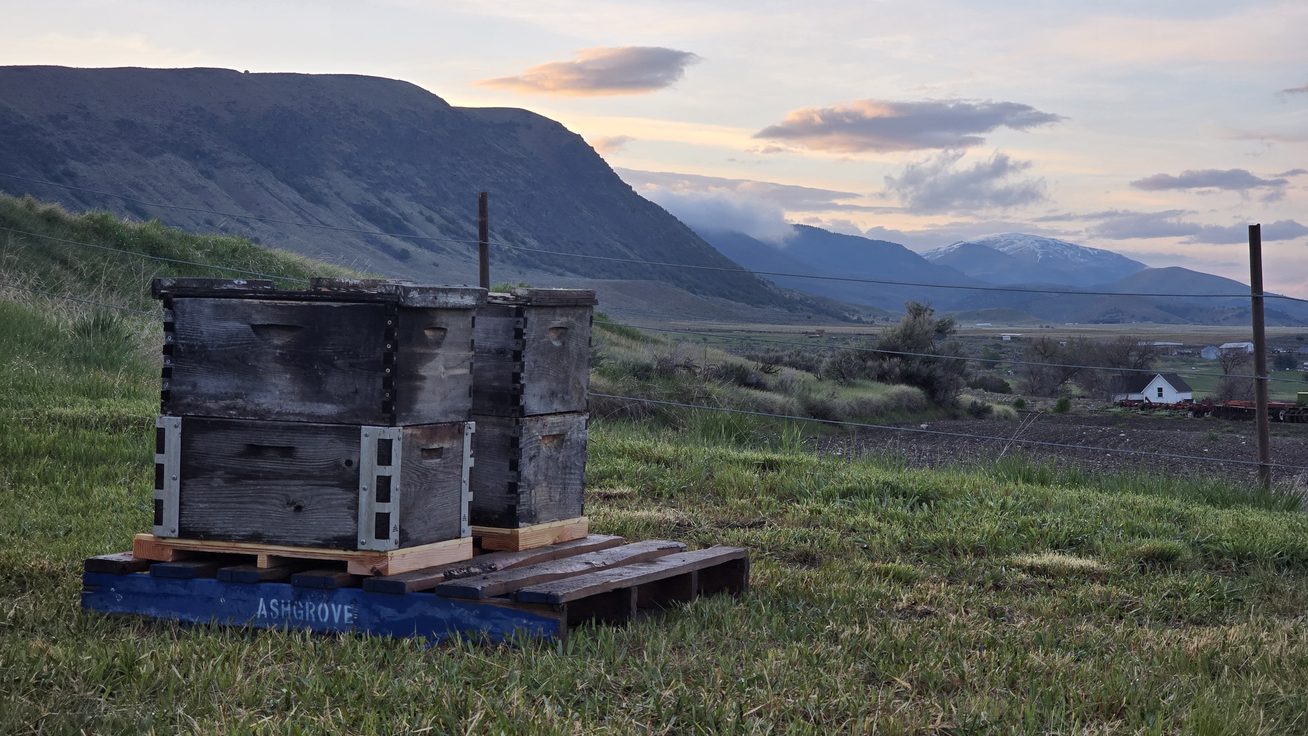
Putting the second brood boxes on right away
Both hives came in single deeps and they were obviously cramped. There were hundreds of bees bundled up on the front of each hive, the kind of mat that says "we ran out of room about two weeks ago, thanks for finally noticing." That isn't a problem you sit on overnight. As soon as the singles were on the pallet I pulled both lids and set a second deep brood box on each, no excluder, just more room.
With splits this strong off almond bees, the worst thing you can do is leave them cramped, both because of swarm pressure and because they need somewhere to draw out fresh comb while the wax-builders are still in peak shape. The empty deeps gave them somewhere to put it.
How I ended up with these two
These hives are about eight years overdue. Way back when I was helping Dad move bee packages out of California, we made a handshake deal: whenever I finally landed somewhere I could keep bees, two of them were mine. It took moving to Weston for that to actually happen. So while these are 2026 hives on paper, I've been thinking about them since the truck rides in and out of Chico.
Dad bought new queens this year, and the ones in my two hives are Carniolan that have already been bred with Italian drones. So the workers coming up in these boxes are running as a Carniolan-Italian cross. Carniolans handle a cold spring buildup well and overwinter cleanly, Italians keep brood production going through summer and tend to be calmer on the frame. Whether that mix actually shakes out the way the breeder description promises is one of the things I'm planning to watch this season.
How Dad got 27 hives out of 9
The reason I have hives at all this spring is that Dad had a strong winter. Nine colonies survived, and he sent them to the almond groves in California, which is the part of the year that really decides what your spring looks like. Almond pollination throws bees onto early forage in massive volume, and they come back to Utah several weeks ahead of where they'd be if they'd just wintered here. By the time he split them, every one of those colonies had the population to come apart cleanly into three.
Nine hives, three-way splits, roughly 27 colonies on the other side. He's planning to sell most of them. He only wants to keep eight himself, partly because that's what fits on his trailer when he hauls them up to some property the family has in Idaho. Anything he doesn't sell, he might end up giving me. I haven't pushed him on it. There's a real argument that two is the right number for a first season at a new place, and there's an equally real argument that I'd be a fool to turn down free hives from someone who actually knows what they're doing. We'll see what Memorial Day weekend looks like.
I'll write a separate guide later on the ways a beekeeper can actually make money on bees, because almond pollination, queen rearing, splits, nucs, honey, wax, and pollen are all on different timelines and most of the "make money with bees" content online flattens that into one big promise. Dad's run several of those plays at once for years, and there's a real article in there.
Saturday peek
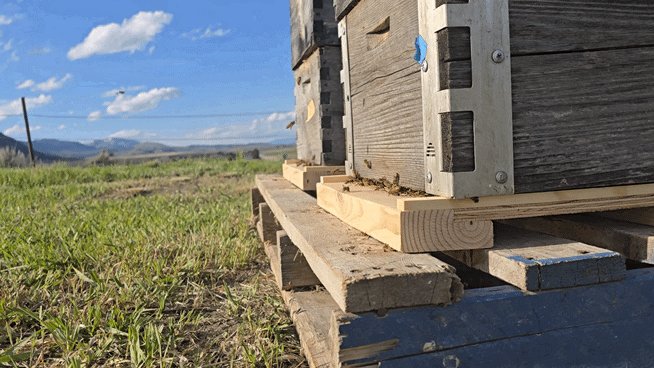
I didn't want to do a real frame-by-frame inspection a day or two after adding the boxes. That just stresses the colony for no good information. I did want to confirm the bees were using the new space, though.
- Hive 1: top brood box was already wall-to-wall bees, every frame covered, all of them working on drawing comb. That hive is going to need watching. If they keep moving at this pace, I'll be adding another box before May is out.
- Hive 2: top brood box about a third full, bees up on the new frames and starting to draw comb but not yet covering everything. Slower pace, still healthy. This is closer to what I expected when I bought the second deep, and it's going to make a useful comparison hive against Hive 1 all season.
Both hives drawing comb on the new box a couple of days in is about as good a sign as I could ask for.
What I'd do differently
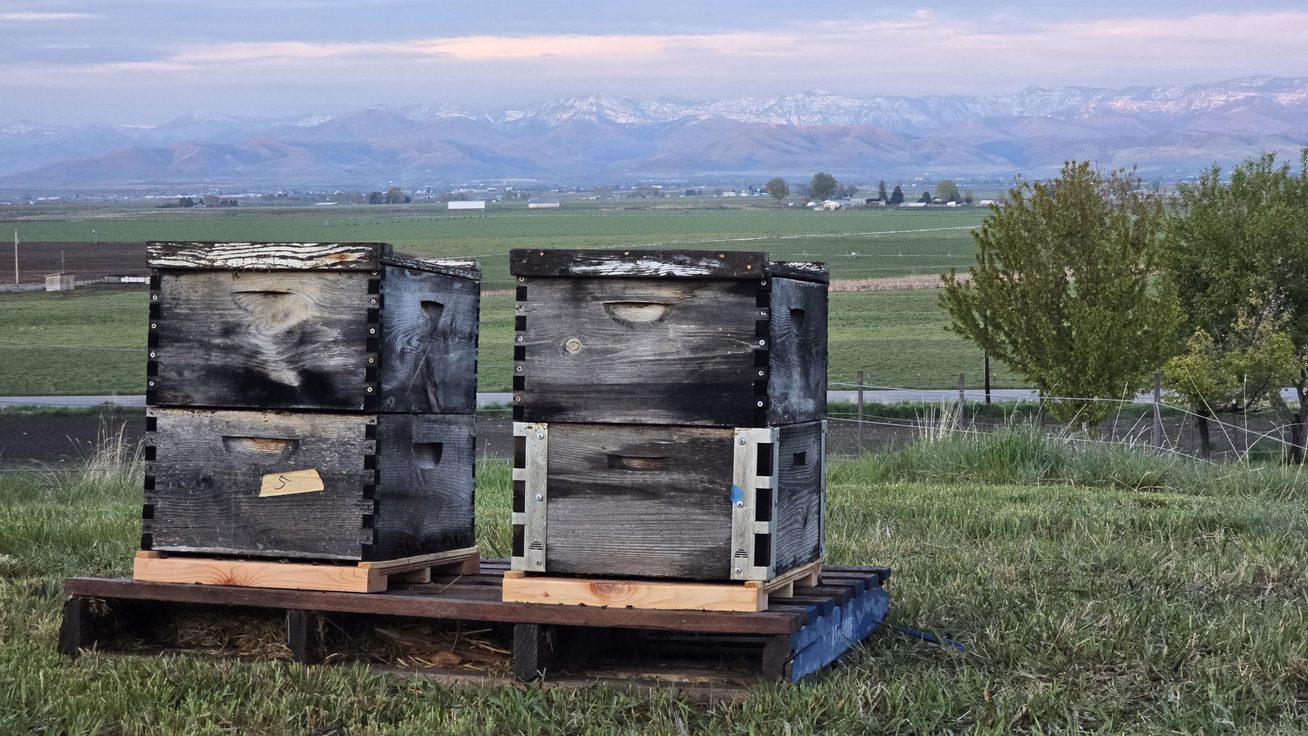
Honestly, not much. I'm leaving the hives close together on this pallet on purpose. If anything, I'm going to look at building or buying a proper four-hive pallet so the setup is ready to load on a truck for almond pollination next spring. That's the play that gave Dad's bees the brood strength to split nine winter survivors into 27 colonies this year, and it only stays an option if the hives stay palletized. Spreading them out across the pasture would make next year's California question harder than it needs to be.
What's next
- First real frame-by-frame inspection, probably the following weekend if the weather holds.
- Confirm queens, brood pattern, eggs, and a Varroa baseline before they hit a real nectar flow.
- Decide on the "do I take more hives from Dad" question once he sees how the sales go.
Related
- All entries in this series
- The kickoff entry
- How to Start Beekeeping in Cache Valley
- Best Time to Start Beekeeping in Cache Valley
Product links above go to Amazon.com. As an Amazon Associate I earn from qualifying purchases.